

AI use in life sciences focused on augmentation - for now
Sun, 10th May 2026
As artificial intelligence sweeps through most industries in 2026, biotech and life sciences are certainly no exceptions. Emerging technology has helped doctors interpret CT scans, scaled the development of new medications and improved efficiency across healthcare, but the progress of AI in these crucial industries will be affected by regulatory, legal and compliance challenges.
Although safeguards need to be tightly maintained around patient confidentiality and cybersecurity, the biggest proponents of AI adoption by biotech, medicine and life sciences companies confidently argue that the myriad potential benefits overwhelmingly outweigh the potential risks posed, such as fabricated data and the perpetuation of biases, as well as data breaches.
A balance needs to be struck between a significant leap in patient outcomes and advancing at a sustainable pace, taking too many risks, and facing cost blowouts and incorrect interpretations of the vast amount of data being collected and analysed daily.
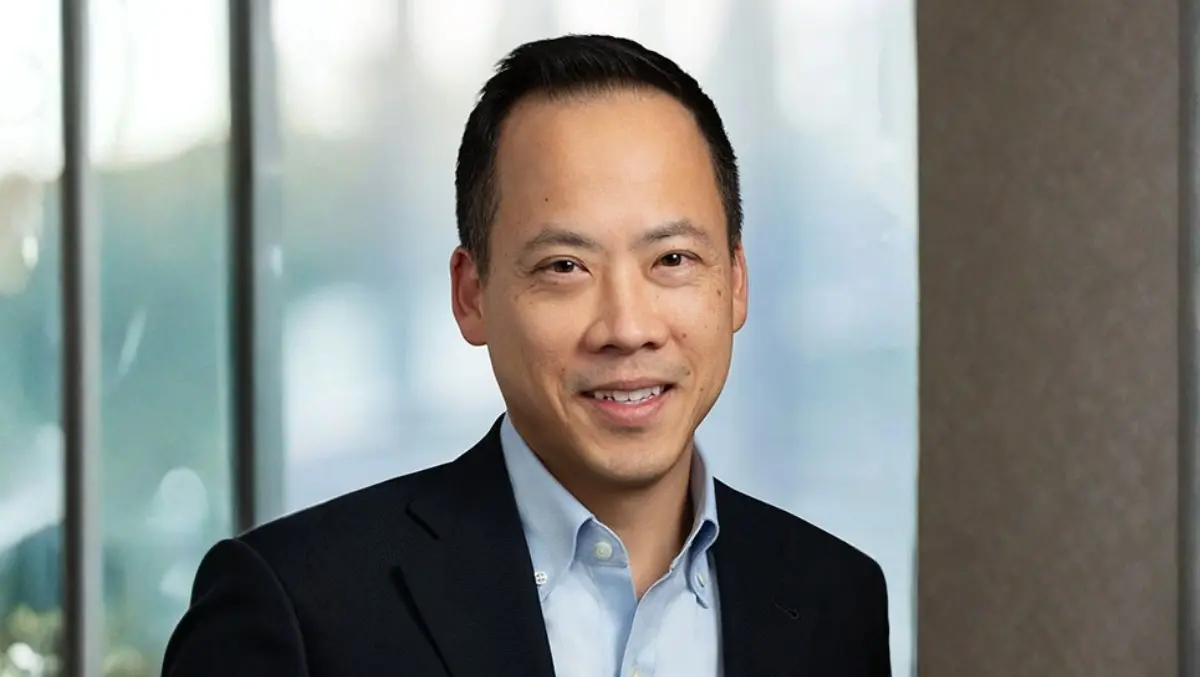
While the medium and long-term benefits of AI within these industries will potentially lead to even more automation and scaled efficiency, a full-scale AI takeover is still a way off. Improving existing workflows is the priority for now, but that can make a fairly substantial difference, says Arthur Mok, Partner at Ropes & Gray.
"The high-level takeaway for AI deployment and adoption within life sciences is that it's, at this current stage, more about workflow augmentation rather than replacement," Mok said.
"It may be in the next several years, we'll see certain work streams get fully replaced. But at this point, where we see the augmentation happening with greatest vigor is in target identification, modeling, particularly in protein and molecular modeling.
"We see it with virtual screening that happens, lead candidate optimisation, clinical trial design.
"The good news here, is that human scientists and researchers aren't being replaced, but instead the scientists, they've got this augmentation tool that helps them accelerate experimentation and actually get to higher-quality, better outcomes faster.
"And what that means, ultimately, for patients is they potentially can get a drug faster and cheaper."
The adoption of AI in this space has varied, in some cases quite significantly, by jurisdiction. Mok notes that while some markets may put more emphasis on speed and scale, while also showing a greater risk tolerance and engaging more in experimentation, that's not the only potential path forward for optimal utilisation of the technology.
Willingness to experiment could give the likes of China an edge. Ethnodiversity is also playing an important role in the data collected through thousands of patients treated, potentially providing more useful data than that of a strictly homogenic population.
"Particularly in China, it's just the way that it's being deployed with a high degree of conviction in supporting experimentation and use of AI, and all the different fields that I just mentioned, where it's augmenting the work of scientists, I think that that's probably a key characteristic.
"The other thing is that when I think about comparisons to the West not necessarily being less creative, but actually being more validation oriented, like ensuring that the AI tool actually works as intended.
"We often see people proving out the use cases with a higher degree of vigour than in some Asian markets, you've got a fast failure model, where you're pushing things out at scale really fast and seeing by virtue of what gets adopted as what works.
"The other thing that actually helps frame the conversation is that when you look at Asia, you're looking at a very heterogeneous, diverse patient population. The patient demographics are vastly different. It's not a homogenous patient population.
"North America tends to be pretty diverse, but when you go to Europe, some of the larger mature markets, there is potentially less ethnodiversity, and so when you combine the difference in what I just described between the Asia and the West, where you've got Asia deploying at scale and with speed in a very diverse market with a diverse set of patient demographics, you tend to get pretty rich data."
As the prevalence of AI increases, it's intriguing to imagine what the future looks like, particularly when it comes to international collaboration, cooperation, and potentially competition.
This is where regulation and laws become much more relevant. If governments do not have the right experts in place, if they are too risk averse or too tolerant, they could leave themselves open to being left behind as other markets move forward with innovative and progressive technology.
The executives able to correctly gamble on where the regulatory and legal lines end up are the likeliest to come out ahead.
"The biggest inflection point is going to be whether there will be a unified series of AI regulations across national borders and maybe unified by trade unions," Mok said
"When you see a maturing of the regulatory environment, you probably will see increased activity in AI adoption, AI usage, because it will become more efficient as people can predict regulatory outcomes.
""A classic challenge right now - particularly in the US market - is that innovation is moving faster than the regulatory framework. The tech community has observed that policymakers and regulators are working to catch up to the technology's power and nuance, which makes it difficult to craft rules that provide clarity and safeguards without unintentionally slowing innovation."