Thermal Management stories
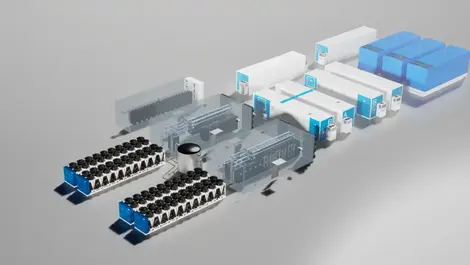
The architecture is aimed at AI-driven data centre builds, promising to reserve up to 90% of provisioned electrical capacity for servers rather than cooling.
Data centre operators could free up more power for servers as the new architecture is designed to direct up to 90% of provisioned capacity to IT compute.
Rising demand for AI data centres is pushing operators to seek custom cooling kit that can handle heavier heat loads and tighter uptime demands.
Traditional data centre designs are being overtaken as AI clusters push rack loads to 50-100kW and demand liquid cooling, faster builds and more power.
Racks are already pushing 50-100kW, forcing operators to redesign cooling, power and build methods for AI workloads.
The partnership targets faster build-outs for AI facilities, as operators face rising heat loads, tighter energy limits and closer scrutiny over water use.
The sector's edge could narrow unless Europe builds photonic chip factories and talent faster, speakers warned at a summit in Eindhoven.
Rising AI power density is pushing data centre operators towards higher-capacity liquid cooling, reshaping who suppliers like Nidec sell to.
The new design could let operators devote 90 MW of every 100 MW of provisioned capacity to servers, easing power constraints for AI build-outs.
The software could help AI data centres cut energy and water use while keeping hotter, denser GPU racks within safe operating limits.
Creators needing faster mobile storage now have a new option, with Samsung's P7 Portable SSD offering USB4 speeds and up to 2TB capacity.
The one-litre machine is designed to let developers and creators run AI workloads locally, reducing reliance on cloud services for privacy and speed.
Rising AI chip power densities are prompting the pair to develop diamond-based packaging that could ease heat bottlenecks in GPU and RF devices.
The deal broadens Vertiv's support for liquid-cooled data centres in EMEA as operators seek specialist help with commissioning and maintenance.
Rising onboard computing power is forcing spacecraft designers to rethink thermal control as orbital data centres face extreme temperature swings and heat loads.
The system could free up more of a data centre's existing power for AI workloads, as cooling can account for up to 40% of energy use.
Rising AI demand is forcing data centres to redesign power systems for faster load swings, tighter efficiency and near-perfect uptime.
It is designed to cut integration work and speed up AI rollouts in existing data centres, research sites and colocation facilities.
Families struggling with bills could get free hot water and heating as the system aims to reuse GPU server waste heat in 100 homes by 2027.
Growing demand for AI cooling is drawing operators and cloud providers to Nidec, which used its Singapore debut to open partnership talks.