

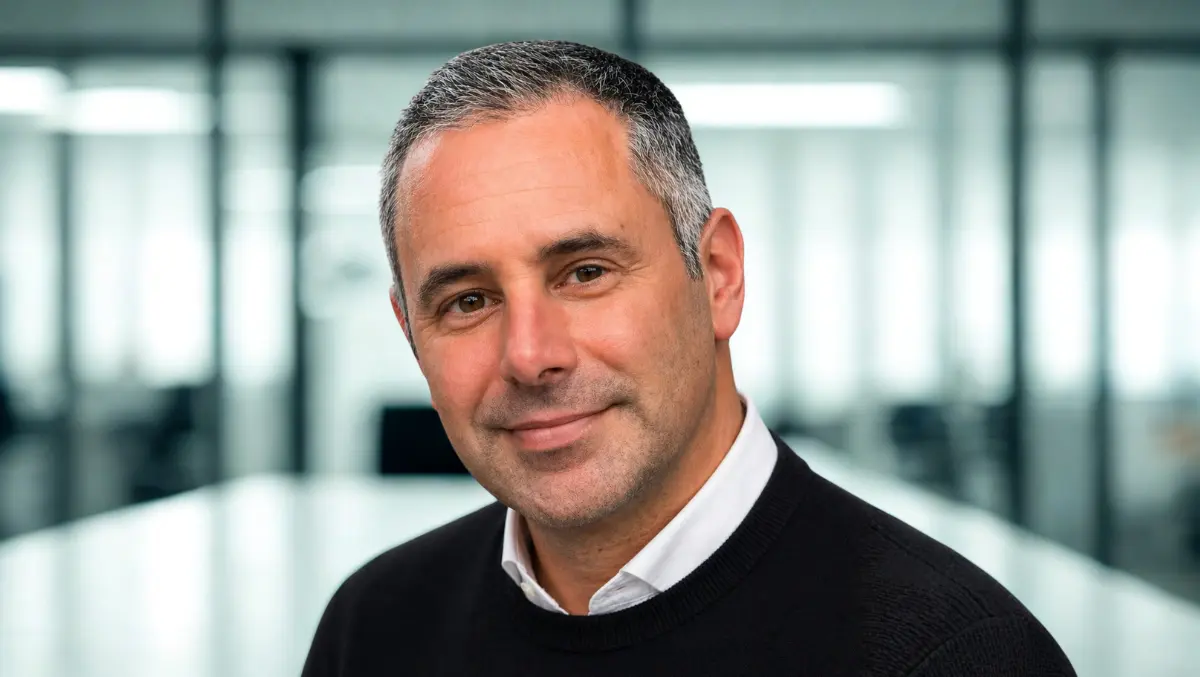
Virtana names Daniel Raskin as Chief Marketing Officer
Thu, 28th May 2026
Virtana has appointed Daniel Raskin as chief marketing officer as demand rises for tools that monitor AI and hybrid cloud systems.
Raskin joins from Mperativ, a venture-backed business he co-founded to apply agentic AI to marketing attribution. The company was later acquired by Lative. Earlier in his career, he held senior roles at ForgeRock, Sun Microsystems, McGraw-Hill and Kinetica.
The appointment comes as Virtana looks to strengthen its position in observability software for hybrid and multi-cloud environments. Large enterprises are increasing investment in AI infrastructure while facing growing pressure to maintain visibility and control across more complex systems.
Research cited by Virtana found that 75% of enterprises report double-digit AI failure rates, which it linked to fragmented observability across distributed AI systems. As a result, observability and governance are moving higher up the agenda for companies deploying AI workloads at scale.
Raskin is expected to lead global marketing strategy, brand development, demand generation and go-to-market execution as Virtana expands its presence in AI and hybrid cloud observability.
Chief executive Paul Appleby said the company hired Raskin for his blend of founder experience, enterprise marketing leadership and product expertise.
"Daniel brings a rare combination of founder instinct, enterprise marketing leadership, and product operating experience. He has built and scaled marketing functions in some of the most demanding categories in enterprise technology, while directly shaping product strategy and growth. That combination is essential at this stage. As Virtana enters a period of accelerating market opportunity, his ability to translate complex, AI-driven infrastructure into clear, outcome-focused narratives will sharpen our market position and strengthen how we communicate value to customers, partners, and investors," said Appleby.
At ForgeRock, Raskin led both marketing and product. He joined when the business had USD $4 million in annual contract value and helped scale it through a period of rapid growth before its stock market debut at a USD $3 billion valuation.
His experience spans enterprise middleware, identity and access management, cloud infrastructure and AI-driven data platforms. He has built global teams, launched new business lines and worked across both start-ups and larger enterprise settings.
AI focus
Virtana has been sharpening its focus on observability for AI infrastructure as customers spread workloads across cloud, on-premises and edge environments. It has recently announced products and updates tied to AI-native application observability and monitoring for AI factory environments, including integrations with Nutanix, AWS Bedrock Guardrails and Dell AI Factory systems.
The company also pointed to a broader shift in enterprise computing as applications become more distributed and AI workloads put more strain on existing monitoring approaches. Suppliers in this market argue that conventional application monitoring tools do not provide enough visibility across interconnected infrastructure, data pipelines and compute resources.
In his first remarks after joining, Raskin echoed that view.
"Virtana is addressing one of the defining infrastructure challenges of this decade. As organizations forge into the AI era, applications have become distributed systems and AI workloads are proliferating rapidly, making observability the central control point for visibility, governance, and resilience at scale. Legacy application monitoring solutions cannot keep pace. Virtana delivers end-to-end observability with the data and context required to power agentic AI, enabling smarter automation, stronger resilience, and disciplined performance as enterprises scale AI," said Raskin.
He joins an executive team that includes chief product officer Amitkumar Rathi and chief financial officer David Stack, who joined Virtana from HubSpot in 2025.
Privately held Virtana serves large enterprises and public sector organisations that need to track the health and performance of applications, infrastructure and AI workloads across mixed computing environments. Its products are aimed at IT operations and DevOps teams seeking to reduce failures, manage costs and maintain service resilience as systems become more distributed.
Virtana was also recently named Best Hybrid Cloud Solution by The Cloud Awards.