

Kaltura launches Dynamic UI for conversational agents
Tue, 17th Nov 2026 (Today)
Kaltura has launched Dynamic UI for its Conversational Agents, now generally available as part of its existing offering.
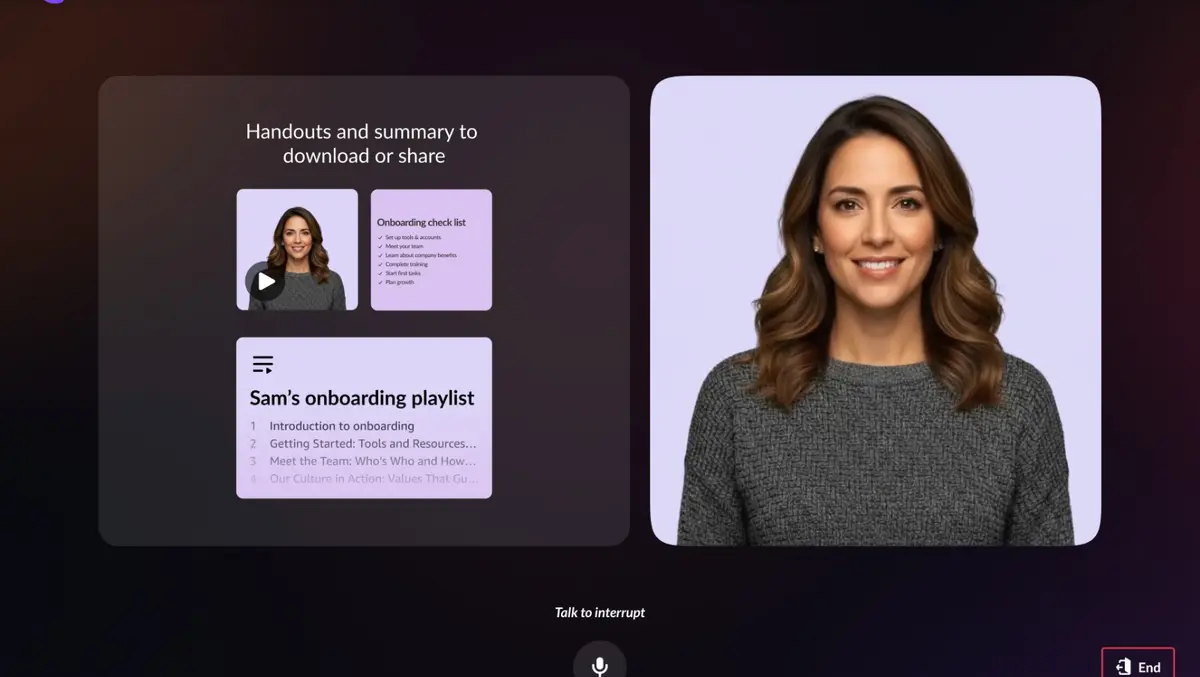
The release adds dynamically generated visual and interactive elements to AI conversations, allowing organisations to combine avatars, video, multimedia and on-screen interfaces within a single exchange.
The system can assemble videos, presentations, animations, interactive galleries and quizzes during a conversation, rather than directing users through fixed websites, applications or content libraries. The interface then changes as the exchange develops, based on a user's questions, interests, progress and stated goals.
Kaltura is positioning the launch as a shift away from predefined digital journeys towards interfaces created in real time around each user. The approach is aimed at customer, employee, learner and audience interactions across enterprise and consumer-facing settings.
How It Works
The company cited employee training as one example, where an AI agent could present a visual explanation, show a video demonstration and then generate a quiz based on the learner's progress. In product discovery, a prospective buyer could be shown a tailored presentation that changes as questions become more detailed.
Kaltura also pointed to media and public-facing uses, including an AI entertainment guide that serves personalised recommendations and content previews, as well as kiosks and digital signage that respond with visual guidance shaped by a visitor's immediate requests.
At the centre of the launch is Kaltura's broader push into what it describes as agentic digital experiences. Dynamic UI builds on three strands of its existing platform: support for multimedia-rich interactions, use of an organisation's own content and metadata, and personalisation based on individual context and objectives.
That means the agents draw on internal content libraries and enterprise knowledge to determine both what information to provide and how to present it. Instead of producing only text or voice responses, the software can decide when to use video, audio, visual media or interactive content during the exchange.
Market Push
The launch comes as software groups seek to move generative AI products beyond chat windows and basic assistants. Many vendors are trying to embed AI into training, customer service, commerce and media workflows through interfaces that can handle richer forms of content.
Kaltura's focus reflects its background in video and media software. It said the approach draws on almost two decades of work in enterprise video and media technology, using that base to support AI-led interactions in which multimedia is a native element rather than an add-on.
Kaltura also argued that enterprise content controls remain important as businesses adopt generative systems. Its agents rely on trusted organisational information, metadata and internal rules so that interactions stay aligned with company-defined objectives.
Ron Yekutiel outlined the company's view of the shift in user interfaces.
"For decades, digital experiences have been designed in advance, with everyone expected to navigate essentially the same websites, applications, and content journeys," said Ron Yekutiel, Co-Founder, Chairman, President and CEO, Kaltura.
"AI changes that fundamentally. With Dynamic UI now commercially available, we're taking another significant step toward a future in which the experience itself is generated and continuously adapted around each individual. By bringing together Conversational Agents, rich video and multimedia, enterprise content intelligence, and generative interfaces, we're enabling organizations to deliver entirely new levels of personalization and engagement across how people learn, work, shop, and consume content," said Yekutiel.
Kaltura serves enterprises, financial institutions, educational institutions, media groups and telecom providers, among other organisations. With Dynamic UI now part of its Conversational Agents product, the company is seeking to expand AI's role from answering questions to assembling the full digital experience around the user.