

Canva adds 1,000 fonts through expanded Monotype deal
Thu, 24th Sep 2026 (Today)
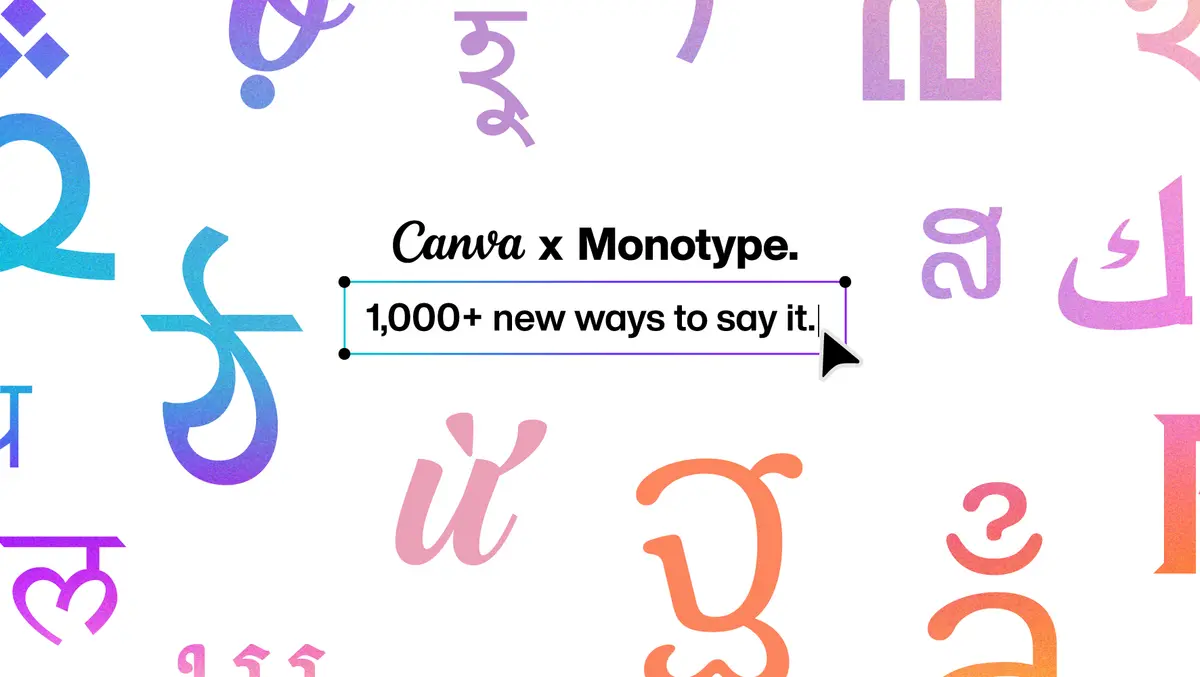
Canva and Monotype have expanded their partnership to add more than 1,000 font styles to Canva, bringing the number of Monotype and partner fonts on the platform to more than 3,000.
The added fonts broaden options for users working in Arabic, Bengali, Hindi, Khmer, Lao, Thai and Vietnamese, where professional design tools have often offered a narrower range of typefaces. Canva users translated more than 17 million designs in 2025, underscoring rising demand for work that can serve audiences across multiple languages and markets.
The expanded collection was curated from Monotype's library and its network of foundry partners. It spans serif, sans serif, display, script and text styles, giving Canva users more options for brand work, marketing materials and other visual content.
Some of the largest additions are in South and South-East Asian scripts. The rollout includes 99 Hindi families comprising 298 styles, 72 Bengali families comprising 237 styles, and 114 Vietnamese-supporting families comprising 249 styles.
It also expands the range available for Arabic, Khmer, Lao and Thai. Highlighted typefaces include Basis Grotesque Arabic from Colophon Foundry, Noort Bengali from TypeTogether, Shree Devanagari from Modular InfoTech, Seewelai from Anagata Type, Handset Sans Lao from Monotype, Malila from Cadson Demak and Brisket Script with Vietnamese support from Måns Grebäck.
The expansion builds on a relationship established in 2023. Since then, fonts from Monotype and its foundry partners have been used in more than one billion Canva designs, according to the companies.
Growing Demand
The update reflects a broader shift in digital design: for many users, supporting a script is no longer enough. Designers creating work for different regions increasingly want more than technical language coverage. They want type choices that match tone, identity and audience expectations in local markets.
That is especially true in languages where the commercial font ecosystem is smaller than it is for Latin scripts. While English-language designers often have thousands of fonts to choose from, creators working in Bengali, Khmer or Lao have historically had fewer options in mainstream design tools.
Monotype, which licenses and distributes typefaces from a wide range of foundries, has positioned itself as a bridge between specialist type design and mass-market creative software. For Canva, the deal adds depth to its content offering as it seeks to serve a global user base ranging from individual creators and students to businesses.
Karen Brewer, Chief Marketing Officer at Monotype, linked the expansion to growing cross-border content creation.
“Creative professionals are creating more content, across more markets and languages. In that environment, being distinctive matters. Typography plays a powerful role in how an idea, identity, or brand becomes recognizable. Our expanded partnership with Canva gives creators greater choice to make work that stands out, while communicating in a way that feels relevant to their audience,” Brewer said.
Charles Nix, Global Head of Creative Strategy at Monotype, said the issue goes beyond basic language support.
“Supporting the characters in a language is only the starting point. Real choice means having different voices, styles, and personalities to choose from. By bringing more than 1,000 additional styles in a wide array of scripts to Canva, we're giving more creators the freedom to find type that fits not only their language, but how they speak visually,” Nix said.
For Canva, the expanded library is part of a broader effort to grow the creative resources available to users in different regions. The company operates in more than 190 countries and has been building content partnerships to support a wider variety of templates, images and design elements alongside fonts.
Morgan Selzer, Global Head of Content Partnerships at Canva, said the company wants the platform's creative options to reflect the diversity of its user community.
“Canva's community creates for audiences, cultures, and markets all over the world. As that community grows, we want the creative choices available to them to grow too. Expanding our work with Monotype gives creators across more languages access to a much broader range of typography and more ways to express what they want to say,” Selzer said.